
Niamey à agrave; the crossroads Bamako –Algiers: what to remember from Tiani’s visit?
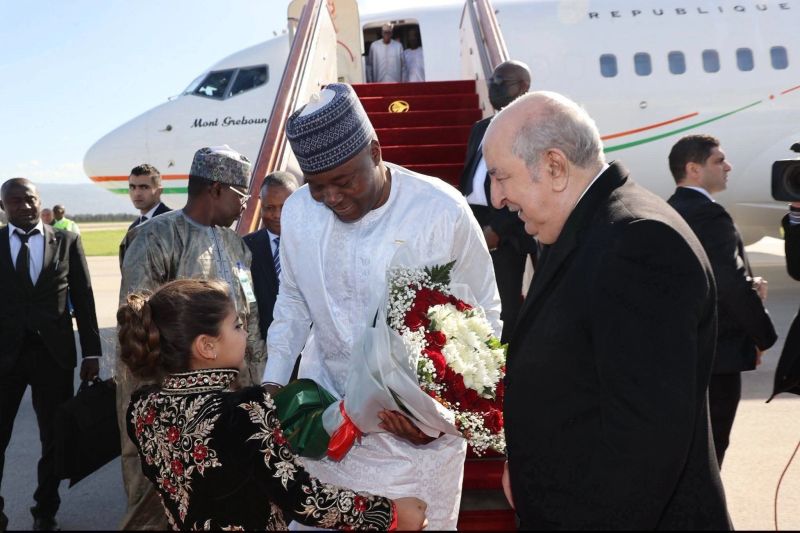
The head of the Nigerien junta, General Abdourahamane Tiani, carried out a 48-hour state visit to Algiers, marking a diplomatic turning point with multiple readings. While tensions persist between his ally; within the Alliance of Sahel States, Mali led by Assimi Goïta, and Algeria by Abdelmadjid Tebboune, this visit raises questions. Between solidarity Sahelian and economic and geostrategic realities, is Niamey playing the balance or is it initiating a repositioning? Find Ousmane Soro’s weekly editorial.
On February 15 and 16, Abdourahamane Tiani was arrested. received with honors at Algiers.
A highly publicized visit, during which the head of the Nigerien junta reaffirmed his sovereignist discourse, multiplying criticisms against the former colonial power as well as against certain states in the sub-region which he regularly accuses of interference, without however supporting his remarks with concrete elements. But beyond that of political rhetoric, a central question arises: how is this sequence perceived at the present time? Bamako?
The Malian malaise and the question of the Algiers Accords
Relations between Mali and Algeria have gradually become strained, particularly since Bamako's questioning of the 2015 Algiers Agreement, of which Algiers was the main mediator and guarantor. For the Malian authorities, this agreement would not have made it possible to fully restore Malian authority. of the state throughout the territory. For Algiers, on the contrary, it constituted a pillar of stability. regional. This strategic divergence contributed to the à cool relations between the two capitals.
At the same time, the signing of the Liptako-Gourma Charter
At the same time, the signing of the Liptako-Gourma Charter by Mali, Burkina Faso and Niger — founding act of the Alliance of Sahel States — dedicated to solidarity new security between the three military regimes, based on mutual defense and a common reading of threats. On the security and political level, the realities of Bamako and Niamey remain similar: fight against armed groups, distrust of certain regional organizations, discourse of sovereignty assumed.
The economic equation: the Algerian asset
However, the economic dimension introduces a different variable. Algeria represents for Niger a strategic opening towards the Mediterranean and Europe. The Nigeria–Niger–Algeria trans-Saharan gas pipeline project, regularly discussed for several years, could at the same time term transform the energy position of Niamey. For a landlocked country and confronted with à sanctions and financial tensions in recent months, the prospect of structuring income and major infrastructure is not trivial. Comparatively, Mali, still engaged in in a secure reconquest of its territory, has more limited economic margins. From this point of view, a rapprochement with Algiers appears to be a rational calculation.
A constant in Tiani's trajectory
This balancing posture is not new. In July 2023, General Abdourahamane Tiani overthrew the democratically elected president Mohamed Bazoum, still held in prison. this day. À Already at the time, Niamey had observed a time of strategic hesitation before fully enrolling in the axis formed by the with Bamako and Ouagadougou. Since then, Nigerien power has been moving forward on a line of sovereignty. claimed, geopolitical pragmatism and ambiguity. assumed.
Between solidarity and solidarity and diversification
The visit to Algiers does not mean a disavowal of the Alliance of Sahel States. But it shows that Niamey intends to diversify its partnerships and avoid any exclusive dependence. There remains a delicate equation: moving too far from Algiers would mean depriving oneself of a major economic and security partner; getting too close could be perceived as a signal of disalignment by its Sahel allies.
Tiani's visit to Algiers does not mark any break or shift.
Rather, it illustrates the complexity of of a Sahelian diplomacy in recomposition. Niamey seems less to choose between Bamako and Algiers than to seek elsewhere; exist between the two. À At the crossroads, Niger advances cautiously, between solidarity and solidarity. politics, necessity Economics and strategic calculation.
Cover photo source: facebook pageCNSP - published; on 02/16/2026