<p>Senegal is undoubtedly experiencing one of the most important political turning points in its democratic history for more than 60 years.</p>
<p>The streets are quiet. The institutions work. Administrations continue to rotate. À At first glance, the country does not appear to be blocked. However, behind this apparent normality, a once silent battle, but today increasingly visible, has been underway at the top of the state for almost two years. This time, there are no tanks or soldiers. The weapons are legal, parliamentary and constitutional. From the duo to duality, here is the story of the fall of the Sonko-Faye tandem.</p>
<p>For several weeks, a question has haunted jurists and observers of Senegalese political life: are we witnessing a crisis? a simple institutional or institutional reform. a profound reconfiguration of the balances of the Republic?</p>
<p>The vote for the constitutional reform by the majority parliamentarian of Pastef marks a turning point. From now on, the President of the Republic has a period of eight days to promulgate the text. À Failing this, the President of the National Assembly could proceed to do so. its promulgation in accordance with the mechanism provided for by the Constitution. But a question remains: can this revision become final without the approval of the people by referendum, while article 103 of the Constitution affirms that “ the revision is final after having been approved. approved by referendum » ?</p>
<p>Beyond Apart from the legal debate, this sequence above all reveals a major political rupture: that of the tandem which had embodied the the hope of an entire people.</p>
<p>For several years, Ousmane Sonko was the face of the Senegalese opposition. His sovereignist speech, his denunciation of corruption and his call for peace a profound break with traditional political practices allowed him to unite young people in search of change.</p>
<p>When his candidacy was prevented, Bassirou Diomaye Faye became his relay. The two men then appeared as two sides of the same political project. One carried the vision, the other embodied continuity. The victory of March 2024 was celebrated as that of a collective rather than that of a man. Never, for several decades, has a tandem aroused so much hope.</p>
<p>But political history teaches one constant: alliances forged in opposition rarely resist opposition. the exercise of power.</p>
<p>The first disagreements appeared discreetly. Then they multiplied. Divergences over the method of governance, institutional balances and political orientations have gradually transformed society. trust into distrust.</p>
<p>The dismissal of Ousmane Sonko from the Prime Minister did not only put an end to the government collaboration. He opened a new battle: that of control of institutions.</p>
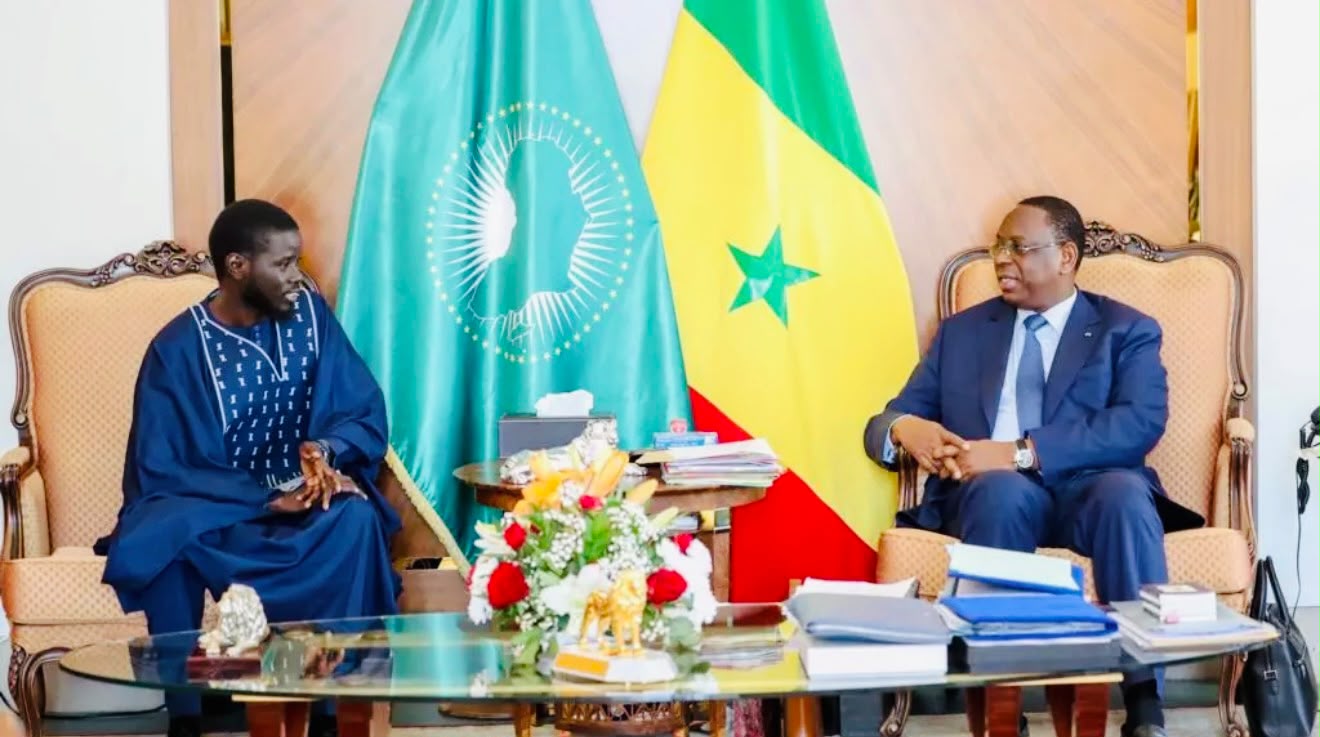
<p>Strong majority parliamentary acquired by Pastef, Ousmane Sonko took the presidency of the National Assembly. Face to face him, Bassirou Diomaye Faye retains the supreme magistracy, but sees his former ally control the institution which now holds the initiative for constitutional reform. This is how we go from tandem to duel.</p>
<p>À At the end of the two national dialogues, the President of the Republic announced: a reform of the Constitution intended to modernize institutions. However, the majority pastef mechanics moves to the offensive and seizes this site to « “rebalance powers and strengthen democratic control.” The Faye clan sees something completely different: a rewriting of institutional rules for the benefit of the majority. parliamentary.</p>
<p>But when the majority parliamentarian uses its numerical force to redraw the institutional balances in a context of conflict with the head of state, the question of political intention becomes inevitable. We thus go beyond the legal framework to arrive at political ambitions. The fact remains that Senegal is a country renowned for its to trust the text. So let's look at the texts together.</p>
<p>Article 103 clearly states that the draft revision is adopted by the National Assembly according to the procedure provided for in this document. article 71, but immediately adds that « the revision is final after having been approved. approved by referendum ». This provision raises a simple question: is the referendum a simple option? policy or an essential condition for when the revision comes into force?</p>
<p>À Literally reading the text, the referendum requirement appears as an essential step in the procedure.</p>
<p>If this is the case, a difficulty arises immediately: the Constitution does not provide for a mechanism allowing for the National Assembly to organize this referendum itself. In practice, only the President of the Republic has the institutional means to initiate such a consultation.</p>
<p>We then find ourselves facing; a possible impasse: a majority A parliamentarian can adopt a reform, but its implementation could depend on a president who does not necessarily intend to support it.</p>
<p>It’s this tension between legitimacy and legitimacy. presidential and majority parliamentary which today poses a risk of institutional crisis. Who, Bassirou Diomaye Faye, President of the Republic, or Ousmane Sonko, President of the National Assembly, will win this institutional showdown? This situation reminds us, a few levels closer, the duel between Senghor and Dia.</p>
<p>Indeed, in 1962, Senegal experienced a major crisis between Mamadou Dia and Léopold Sédar Senghor. Behind the conflict of men was already being played out. a struggle for control of institutions. This crisis resulted in the arrest of Mamadou Dia and a profound transformation of the political regime. Furthermore, it should be noted that today's circumstances are different. Institutions, over the years, have become increasingly solid and democracy has taken root.</p>
<p>But one constant remains: when a political conflict moves onto constitutional terrain, it involves much more than the destiny of two men. It involves the future of the Nation.</p>
<p>However, questions remain unanswered: youth, employment, education, health, agriculture... The Constitution must not be the property of the of a majority to the detriment of an opposition, although any majority is legitimate.</p>
<p>Until then, Diomaye Faye remains silent, but Pastef will not make the mistake of underestimating the ambition and power of a serving head of state.</p>
Incontournable
Politics
SENEGAL: could this be an institutional coup? More than sixty years later, the return of war to the top of the State
In Senegal, the Sonko-Faye rupture opens an institutional battle around constitutional reform, between legitimacy and legitimacy. presidential, majority parliamentary and risk of crisis.